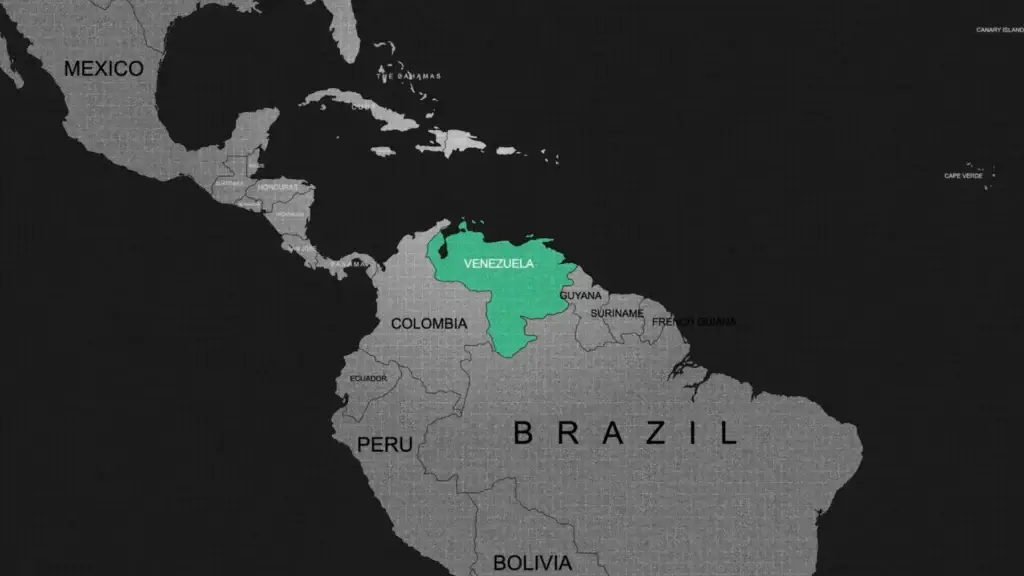
In the early hours of January 3, 2026, the United States conducted a rapid, high-intensity military operation inside Venezuela, resulting in the capture of President Nicolás Maduro and his wife, Cilia Flores. The operation combined air and electronic warfare, strikes on key military and communications infrastructure, and special operations raids focused on Caracas and surrounding states. Maduro and Flores were transferred to U.S. custody to face existing federal indictments related to narcotics trafficking, narco-terrorism, and firearms offenses.
-
The operation did not dismantle the Venezuelan state apparatus. Senior regime figures, including Defense Minister Vladimir Padrino López and Interior Minister Diosdado Cabello, were not targeted. Vice President Delcy Rodríguez was designated acting president by Venezuela’s Supreme Court and retained the backing of the armed forces.
-
While the United States framed the action as a law enforcement-led decapitation strike rather than an occupation, U.S. officials stated they would exert decisive influence over Venezuela’s political and economic trajectory and reserved the right to conduct further attacks. Caracas remains under a state of emergency, with elevated military posture and internal security controls.
The operation marked the culmination of a long-running U.S. pressure campaign rather than a sudden escalation. Washington accused Maduro of leading a transnational narcotics network and enabling hostile state and non-state actors, including Iran-linked networks, to operate in the Western Hemisphere. The Trump administration reinforced these claims through sanctions, maritime interdictions, and, from late 2025, direct military action against alleged trafficking routes.
-
While publicly framed as a law enforcement and counter-narcotics effort, we assess Venezuela’s strategic energy value is likely a key decisive driver behind the military operation to remove Maduro. The country holds the world’s largest proven oil reserves, yet output remains constrained by sanctions, mismanagement, and underinvestment. Maduro’s removal creates leverage to force a structural opening of the energy sector to U.S. capital under terms favorable to Washington.
-
In addition, the Trump administration consistently linked regional security to migration control. Stabilizing Venezuela under a U.S.-aligned framework would support efforts to reverse displacement flows and justify enforced returns, a U.S. domestic political objective.
Potential Scenarios
The immediate post-detention environment is defined by strategic uncertainty. Maduro’s removal disrupts regime cohesion but does not resolve the question of power. Acting President Rodríguez has alternated between defiant rhetoric and calls for dialogue, indicating an effort to preserve regime continuity while testing U.S. limits. The armed forces’ public unity conceals fracture risks, particularly if external pressure increases or elite guarantees weaken.
We will continue to monitor the situation in the region but we assess three potential scenarios in the coming weeks in Venezuela:
-
Scenario 1: Regime Accommodation
Remaining Chavista elites accept U.S. demands, including opening the oil sector to U.S. investment, in exchange for retaining formal control. Public discontent remains high, but relative stability holds under sustained U.S. military presence in the southern Caribbean, with continued counter-narcotics strikes at sea, but no major secondary ground operation. Internal fractures persist, creating medium-term coup or defection risks. -
Scenario 2: Regime Defiance
The regime refuses cooperation with the U.S. and Maduro’s U.S. sentencing escalates tensions. President Trump authorizes a second wave of strikes against senior figures, likely triggering a leadership collapse and a power vacuum. Venezuela faces rising insurgency risks, including nationalist, guerrilla, or terror-style opposition to perceived U.S. rule. Long-term U.S. ground control is unlikely to be sustainable, increasing the likelihood of prolonged instability and regional spillover. -
Scenario 3: Opposition Ascendancy
María Corina Machado returns with explicit U.S. backing, using popular mobilization and the targeted removal of remaining regime leaders to seize power. Her government rapidly opens Venezuelan markets to the United States, but reprisal justice against entrenched networks fuels armed resistance. The transition carries elevated fragmentation risks and potential Syria-style dynamics, as displaced elites with deep economic stakes resist violently.
Regional Implications
The U.S. operation in Venezuela likely signals a more assertive regional security posture, with limited immediate spillover but potential elevated disruption risks for travel, maritime activity, and personnel security across northern Latin America and the Caribbean. We urge businesses and travelers in the region to be mindful of the following considerations:
-
U.S. Policy Direction: The operation indicates a U.S. willingness to employ direct military and law enforcement tools to shape regional outcomes, particularly around energy access, sanctions enforcement, and migration control. Similar targeted actions remain possible in other locations if U.S. objectives are not met.
-
Aviation Disruption Risk: Further escalation could trigger localized airspace closures or routing restrictions around Venezuelan airspace and the Southern Caribbean. Any such measures are likely to be short lived, but may cause knock-on delays for regional hubs and travel itineraries.
-
Maritime and Trade Exposure: Maritime interdiction and de facto blockade risks around Venezuela are expected to persist in the short term, increasing compliance, insurance, and scheduling pressures for shipping and energy-adjacent supply chains. Travelers with upcoming yachting, sailing, or cruising voyages may also face movement restrictions due to ongoing tensions in the region – we encourage anyone with upcoming travel to be mindful of potential restrictions or reroutings.
-
Criminal Displacement: Heightened pressure on Venezuelan armed criminal actors may drive displacements into neighboring states, most notably Colombia, increasing localized security threats and cross-border crime risks.
How Concentric Can Help
Concentric’s intelligence analysts and security professionals continue to monitor developments in Venezuela and the wider region. Our team brings decades of regional experience, supported by on-the-ground expertise.
-
Intelligence Support: Analysts provide periodic updates and travel risk assessments to help clients anticipate emerging threats.
-
Crisis Management: Our Crisis Management teams support active security challenges, including conflict evacuations and contingency planning.
-
Security Operations: Executive protection teams safeguard high-net-worth clients, business operations, and critical events across Mexico and neighboring areas. On-the-ground advisory support is available for travel and market-entry planning.
-
Security Consulting: Concentric delivers risk assessments to identify vulnerabilities at offices, residences, and industrial sites across the region.